Showing posts with label Bugatti. Show all posts

Saturday, January 1, 2011

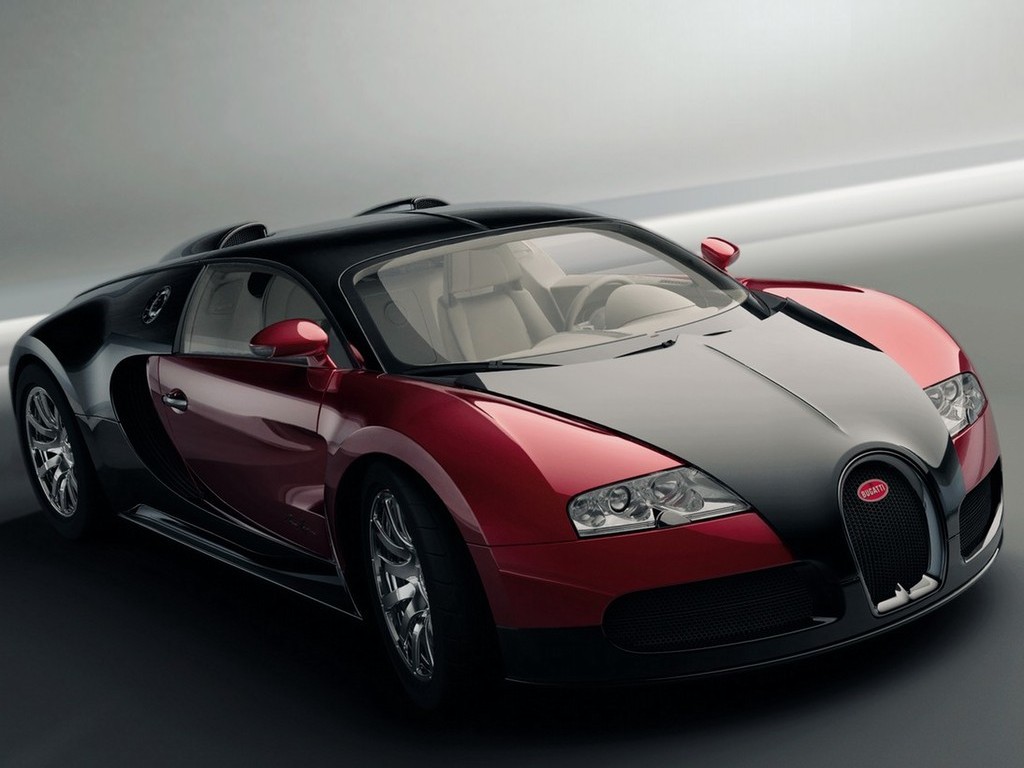
2011-2012 The Bugatti Veyron 16.4

The Bugatti Veyron is both the fastest and the most expensive car in the world. Whether or not Bugatti holds the top spot for long remains to be seen, but now that they've broken both of these records, there's sure to be some competition between themselves and other luxury and performance car makers.
2011 Bugatti Veyron 16.4 Super Sport Rear Angle View2011 Bugatti Veyron 16.4 Super Sport Rear Angle View

2011 Bugatti Veyron 16.4 Super Sport Photos2011 Bugatti Veyron 16.4 Super Sport Photos
aving designed an engine and gearbox that could take them to their planned top speed Bugatti needed to make sure the Veyron had suitable brakes and tyres to cope with extraordinary forces it could produce. Michelin produced the run-flat road tyres capable of surviving the 253 mph top speed, whilst silicon carbide reinforced carbon brakes and a huge rear spoiler, which acts as an airbrake above 124 mph, ensured that the Veyron could reach a standstill from 249 mph in just 10 seconds.
2011 Bugatti Veyron 16.4 Super Sport Engine2011-2012 The Bugatti Veyron 16.4

Inside the 2011 Bugatti Veyron 16.4

Not only is it the most expensive car, but it is also the fastest production car on the road today. Its 1001 HP engine pushes it to its top speed of over 250 mph, which is faster than the 240 mph of the previous holder of the top spot - the McLaran F1.
2011 Bugatti Veyron 16.4 Super Sport Interior View2011 Bugatti Veyron 16.4 Super Sport Interior View
Inside the Veyron it is easy to see why this supercar weighs over 1.8 tons. It contains all the refinement you would expect in a luxury saloon, including exquisite leather trim for the seats and surrounds and bespoke aluminium controls for the car lights and sound system. The owner also a receives a special top speed key, which retracts the rear spoiler, closes the front air vents and lowers the ride height to 6.5 cm in preparation for a high speed run.
2011 Bugatti Veyron 16.4 Super Sport SupercarInside the 2011 Bugatti Veyron 16.4

Monday, September 27, 2010

Bugatti Veyron Wallpaper

Bugatti Veyron Wallpapers
Bugatti Veyron Test Drive
Bugatti Veyron wallpapers
Bugatti Veyron Photo

Monday, September 6, 2010

2010 Bugatti Sports Cars Veyron from Mansory by Linea Vincero d’Oro


MANSORY understands the importance of combining luxury and technology with the golden aspirations of this unique sports cars. Adding to the list of many modified Bugattis sports cars, Mansory LINEA Vincerò d’Oro has created this incredibly gaudy-looking Veyron. It’s got some design changes, it’s got some gold and it’s one of a kind. However, Mansory will perform this modifications for anyone who has the cash to pay for it.


With the LINEA Vincerò d’Oro, MANSORY has completed its strictly limited series sports cars for the refined Bugatti Veyron 16.4 sports cars. Using targeted changes, MANSORY first transformed the Bugatti Veyron sports cars into the LINEA Vincerò and then, using a special gold-coloured alloy, into the unique LINEA Vincerò d’Oro.


This one-off super car tune job by Mansory is perfect for the individual with nearly inexhaustible wealth. The Mansory Linea Vincero d’Oro version of the Bugatti Veyron adds a carbon fiber aerodynamics kit and gold details on the grille, the tires, the door handles and gas tank. The interior is equally accented in gold color, but the rest of this beast is all Bugatti sports cars.


Along with such gaudy monstrosities as the Pepto-pink Bentley and the Polo Sport-on-acid Porsche Panamera, Mansory has modified the Veyron sports cars with the Linea Vincero range of accessories, including a full aero kit and highly polished carbon-fiber body panels that include copper threads interwoven into the material for even more flash.


MANSORY manufactures almost all the components in the car’s body from ultra-light, high-strength carbon and the autoclave method of hardening under high pressure and high temperatures used during the manufacturing process makes a huge improvement to the quality of the materials. One unique feature of the design of the LINEA Vincero d’Oro is the carbon fabric with inbuilt copper thread used by MANSORY, the metallic sheen of which really brings out the exceptional nature of this special sports cars.


2010 Bugatti Sports Cars Veyron from Mansory by Linea Vincero d’Oro
The sideskirts have also been remodelled, as to offer a more stunning look. To give the engine optimal cooling, Mansory has created larger air outlets to the side and rear of the Veyron. The diffuser has also had some work done, as to help with the handling of the sports cars.
Mansory and LINEA Vincero previously introduced a Bugatti sports cars with visual and performance upgrades that cost an extra $985,776 – on top of the sports cars.

Tuesday, June 8, 2010

Styling Bugatti Veyron

Not just a super car that carries on the name of racing driver Pierre Veyron, who, while racing for the original Bugatti car manufacturer, won the 24 hours of Le Mans in 1939, Bugatti Veyron 16.4 is the second fastest car in the world and the most powerful, it can easily pass as a super hero`s car like Batman. It has the fastest acceleration speed, reaching 60 mph in 2.6 seconds.
Endowed with W16 engine-16 cylinders in 4 banks of 4 cylinders fed by four turbochargers, a dual-clutch DSG computer-controlled manual transmission, the Veyron has a length is 4462 mm (175.8 in) a wide of 1998 mm (78.7 in) and hight of 1206 mm (47.5 in). Counting a sum of 10 radiators, for the engine cooling system, for transmission oil, a heat exchanger for the air to liquid intercoolers, for engine oil etc., the car has a power to weight ratio of 529 bhp/tonne.
If we talk about performance we are dazzled by this supercars power to reach 200 and 300 km/h (124 and 186 mph) in 7.3 and respectively 16.7 seconds, wining for herself the name of the quickest-accelerating production car in history. If we count the fact that the top speed of Bugatti Veyron is 253.2 miles per hour (407.5 km/h), a speed limited electronically to prevent tire damage (it can run even faster) we can understand why this spectacular car must consume 40.4 L/100 km (4.82 mpg) when it`s running at top speed and in city driving 24.1 L/100 km.


Styling Bugatti Veyron

Not just a super car that carries on the name of racing driver Pierre Veyron, who, while racing for the original Bugatti car manufacturer, won the 24 hours of Le Mans in 1939, Bugatti Veyron 16.4 is the second fastest car in the world and the most powerful, it can easily pass as a super hero`s car like Batman. It has the fastest acceleration speed, reaching 60 mph in 2.6 seconds.
Endowed with W16 engine-16 cylinders in 4 banks of 4 cylinders fed by four turbochargers, a dual-clutch DSG computer-controlled manual transmission, the Veyron has a length is 4462 mm (175.8 in) a wide of 1998 mm (78.7 in) and hight of 1206 mm (47.5 in). Counting a sum of 10 radiators, for the engine cooling system, for transmission oil, a heat exchanger for the air to liquid intercoolers, for engine oil etc., the car has a power to weight ratio of 529 bhp/tonne.
If we talk about performance we are dazzled by this supercars power to reach 200 and 300 km/h (124 and 186 mph) in 7.3 and respectively 16.7 seconds, wining for herself the name of the quickest-accelerating production car in history. If we count the fact that the top speed of Bugatti Veyron is 253.2 miles per hour (407.5 km/h), a speed limited electronically to prevent tire damage (it can run even faster) we can understand why this spectacular car must consume 40.4 L/100 km (4.82 mpg) when it`s running at top speed and in city driving 24.1 L/100 km.


Monday, June 7, 2010

Bugatti EB 164 Veyron

Bugatti EB 164 Veyron, 2004


Bugatti Veyron 16.4
The Bugatti Veyron 16.4 is the most powerful, most expensive, and fastest street-legal production car in the world, with a proven top speed of over 400 km/h (407 km/h or 253 mph). It reached full production in September 2005. The car is built by Volkswagen AG subsidiary Bugatti Automobiles SAS and is sold under the legendary Bugatti marque. It is named after racing driver Pierre Veyron, who won the 24 hours of Le Mans in 1939 while racing for the original Bugatti firm.

History
Development of the vehicle began with the 1999 EB 18/3 "Veyron" concept car. Introduced at the Tokyo Motor Show, it was similar in design and appearance to the final Veyron production car. One major difference was the EB 18/3's use of a W18 engine with three banks of six cylinders. The Veyron was designed by Hartmut Warkuss of Volkswagen rather than Giorgetto Giugiaro of ItalDesign who had handled the three prior Bugatti concepts.

In the case of the Veyron, it will be several years before Volkswagen will be able to see if their investment in developing ground-breaking technology has paid off. One key measure is how much (if any) of the technology developed for the Veyron finds use in mass-produced cars.
The first personally owned Veyron was debuted in front of Hotel De Paris in Monte Carlo during the 2005 Grand Prix.

Specifications
The Veyron features a W16 engine—16 cylinders in 4 banks of 4 cylinders, or the equivalent of two narrow-angle V8 engines mated in a vee configuration. Each cylinder has 4 valves, for a total of 64, but the narrow V8 configuration allows two camshafts to drive two banks of cylinders so only 4 camshafts are needed. The engine is fed by four turbochargers, and it displaces 8.0 L (7,993 cc/488 in³) with a square 86 by 86 mm bore and stroke.

Putting this power to the ground is a dual-clutch DSG computer-controlled manual transmission with 7 gear ratios via shifter paddles behind the steering wheel boasting an 8 ms shift time. The Veyron can be driven by full automatic transmission. The Veyron also features full-time all-wheel drive developed by Haldex helping to transfer power to the road. It uses special Michelin run-flat tires designed specifically for the Veyron to accommodate the vehicle's top speed.
The car's wheelbase is 2700 mm (106.3 in). Overall length is 4466 mm (175.8 in). It measures 1998 mm (78.7 in) wide and 1206 mm (47.5 in) tall.
Curb weight is estimated at 4,160 lb (1890 kg). This gives the car a power to weight ratio of 529 bhp/tonne.

Performance
According to Volkswagen, the final production Veyron engine produces between 1020 and 1040 metric hp (1006 to 1026 SAE net hp), so the car will be advertised as producing "1001 horsepower" in both the US and European markets. This makes it the most powerful production road-car engine in history. Torque is 1250 N·m (922 ft·lbf).

Top speed was initially promised to be 252 mph (406 km/h), but test versions were unstable at that speed, forcing a redesign of the aerodynamics. In May 2005, a prototype Veyron tested at a Volkswagen track near Wolfsburg, Germany, and recorded an electronically limited top speed of 400 km/h (249 mph). In October, 2005, Car and Driver magazine's editor Csaba Csere test drove the final production version of the Veyron for the November 2005 issue. This test, at Volkswagen's Ehra-Lessien test track, reached a top speed of 253 mph (407 km/h).

The Veyron is the quickest production car to reach 100 km/h (62 mph) with an estimated time of 2.5 seconds. It also reaches 200 and 300 km/h (124 and 186 mph) in 7.3 and 16.7 seconds respectively. It should also be noted that the Veyron's 0-200 mph (0-322 km/h)time is quicker than the McLaren F1's 120-200 mph (193-322 km/h) time. This makes the Veyron the quickest-accelerating production vehicle in history. It also consumes more fuel than any other production car, using 40.4 L/100 km (4.82 mpg) in city driving and 24.1 L/100 km (10 mpg) in combined cycle. At full-throttle, it uses more than 125 L/100 km (2.1 mpg)—at full throttle, the Veyron would empty its 100 L fuel tank in just 12.5 minutes. The car's everyday top speed is listed at 234 mph (377 km/h). When the car reaches 137 mph (220 km/h), hydraulics lower the car until it has a ground clearance of about 3 1/2 inches (8.9 cm). At the same time, the wing and spoiler deploy. This is the "handling" mode, in which the wing helps provide 770 pounds (3425 newtons) of downforce, holding the car to the road. The driver must, using the key, toggle the lock to the left of his seat in order to use the maximum speed of 253 miles per hour (407 km/h). Theoretically it can go faster but it is electronically limited to 253 miles per hour (407 km/h) to prevent tire damage. The key functions only when the vehicle is at a stop when a checklist then establishes whether the car—and its driver—are ready to enable 'top speed' mode. If all systems are go, the rear spoiler retracts, the front air diffusers close and the ground clearance, normally 4.9 inches (12.4 cm), drops to 2.6 inches (6.6 cm).

The Veyron uses unique cross-drilled and turbine vented carbon rotors for braking that draw in cooling air. Each caliper has eight titanium pistons. Bugatti claims maximum deceleration of 1.3 g on road tires. Prototypes have been subjected to repeated 1.0 g braking from 194 to 50 mph (312 to 80 km/h) without fade. With the car's fearsome acceleration from 50 to 194 mph (80 to 312 km/h), that test can be performed every 22 seconds. At speeds above 124 mph (200 km/h), the rear wing also acts as an airbrake, snapping to a 70-degree angle in 0.4 seconds once brakes are applied, providing up to 0.6 g (6 m/s²) of deceleration. Bugatti claims the Veyron will brake from 252 mph (406 km/h) to a standstill in less than 10 seconds. The braking is also so evenly applied that the car will not deviate from a straight path if the driver lets go of the steering wheel, even with the brakes fully applied starting from close to top speed.

Wednesday, May 26, 2010

Bugatti 16C Galibier Car

Detail specification new sport luxury car design prototype Bugatti 16C Galibier High-Powered Sedan pictures gallery. The exclusive car designs technology W16-powered sedan currently under development. The car company manufacturer of the fastest car on the face of the earth, the Bugatti Veyron, are now willing to craft from the fastest saloon of all those have been sold, the Bugatti 16C Galibier. You could say that this car is a modern interpretation of the Bugatti Type 57 of the 30’s, which by then had a name which referred to the Galibier four-door sedan. For the time being is in its prototype stage and are still responsible for Bugatti sought the views of the media and customers to evaluate the possibility of building it. Has not been discussed so much of its mechanics, but what is certain is who would be the Bugatti Veyron W16 for close to 1000 horsepower of this and certainly exceeds the 370 km / h. One of the most curious details we have at the top of the hood, which is divided into two parts as in the old Bugatti.

Bugatti 16C Galibier Car

Detail specification new sport luxury car design prototype Bugatti 16C Galibier High-Powered Sedan pictures gallery. The exclusive car designs technology W16-powered sedan currently under development. The car company manufacturer of the fastest car on the face of the earth, the Bugatti Veyron, are now willing to craft from the fastest saloon of all those have been sold, the Bugatti 16C Galibier. You could say that this car is a modern interpretation of the Bugatti Type 57 of the 30’s, which by then had a name which referred to the Galibier four-door sedan. For the time being is in its prototype stage and are still responsible for Bugatti sought the views of the media and customers to evaluate the possibility of building it. Has not been discussed so much of its mechanics, but what is certain is who would be the Bugatti Veyron W16 for close to 1000 horsepower of this and certainly exceeds the 370 km / h. One of the most curious details we have at the top of the hood, which is divided into two parts as in the old Bugatti.

Monday, April 19, 2010