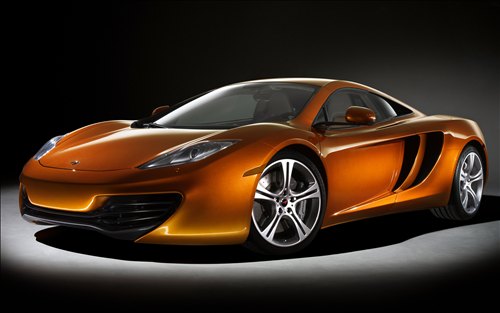
McLaren MP4-12C, 2011


The McLaren MP4-12C is revealed as the first in a range of high-performance sports cars from McLaren Automotive, the independent car division based at the McLaren Technology Centre in Woking, England. The 12C, and future models within the range, will challenge the world's best sports cars, benefiting from the expertise and virtuosity of the McLaren Group.
Twenty years of sports car design, engineering and production combined with inspirational success in Formula 1 have driven Ron Dennis, McLaren Automotive Chairman, to announce his plans for the ultimate line-up of technology-led and customer-focused performance cars for the 21st century. The rules in the sports car world are about to be re-written.
Through a rich modern history, McLaren's automotive division has already built the world's most critically acclaimed supercar, the McLaren F1 (1993-1998) and the world's best-selling luxury supercar, the Mercedes-Benz SLR McLaren (2003-2009). McLaren Automotive now looks to the future with a new range of revolutionary sports cars.
Inside out
The heart of the new car is the Carbon MonoCell. McLaren pioneered the use of carbon composite construction in the 1981 Formula 1 MP4/1 model and set a trend that all Formula 1 teams have followed. The company brought carbon fibre to road cars for the first time with the 1993 McLaren F1 and then built on this experience with a carbon fibre chassis and body on the SLR manufactured to the same exacting standards, but in higher volumes.
Carbon chassis have remained the preserve of the most expensive exotic cars; a purchase for the super-rich where costs are driven by the complexity of carbon fibre chassis design and build.
The 12C changes this by introducing the advantages of carbon composite - light weight, high strength and torsional rigidity, and longevity - to a more affordable sector through its revolutionary engineering as a one-piece moulding. Never before has a carbon fibre chassis been produced this way.
The 12C MonoCell not only brings dynamic benefits, but also offers fundamental engineering opportunities that form the basis of the car's unique character. It has been designed to allow a much narrower structure overall which in turn contributes to a more compact car that is easier to position on the road and more rewarding to drive.
Powertrain: pure McLaren
The McLaren MP4-12C is powered by a twin-turbocharged, 3.8 litre 90° V8 engine - the 'M838T'. This marks the start of a new era in 'core' segment sports cars - smaller capacity, lighter weight, higher efficiency and more economical power units. The engine has the highest specific power output in its segment which, when allied to its low weight carbon composite chassis, delivers exemplary power- and torque-to-weight ratios.
Inside: it all starts with the driver
Packaging was fundamental to the McLaren MP4-12C design challenge. Externally, the car had to be compact, yet internally it had to offer an unparalleled driver and passenger environment where comfort and driving enjoyment at all levels were not compromised.
Like the McLaren F1, the driver has controls on both sides, which allows for a rational positioning of switches:
* Climate controls on each door console
* Telematics on the upper centre console
* Active Dynamics Panel on the middle centre console
* Transmission and minor controls on the tunnel console
* Trip computer and cruise controls on steering column
The Active Dynamics Panel provides two rotary switches and four push buttons:
* 'Start/Stop'
* 'Active' activates all the dynamic controls.
* 'Winter' sets powertrain, suspension and electronic aids to maximum driver support.
* 'Launch' initiates the launch control system.
* The two rotary switches control 'powertrain' and 'handling', each having three position settings for normal, sport and high performance driving modes.
* 'Powertrain' changes throttle response, gearbox strategy, shift times and impulse (how much one can feel the gearchange). The coaxial 'Manual' button controls use of manual gearbox functions.
* 'Handling' changes stability control, steering weight, suspension firmness and roll stiffness. The coaxial 'Aero' button allows the driver to deploy the airbrake for increased downforce.
Twenty years of sports car design, engineering and production combined with inspirational success in Formula 1 have driven Ron Dennis, McLaren Automotive Chairman, to announce his plans for the ultimate line-up of technology-led and customer-focused performance cars for the 21st century. The rules in the sports car world are about to be re-written.
Through a rich modern history, McLaren's automotive division has already built the world's most critically acclaimed supercar, the McLaren F1 (1993-1998) and the world's best-selling luxury supercar, the Mercedes-Benz SLR McLaren (2003-2009). McLaren Automotive now looks to the future with a new range of revolutionary sports cars.
Inside out
The heart of the new car is the Carbon MonoCell. McLaren pioneered the use of carbon composite construction in the 1981 Formula 1 MP4/1 model and set a trend that all Formula 1 teams have followed. The company brought carbon fibre to road cars for the first time with the 1993 McLaren F1 and then built on this experience with a carbon fibre chassis and body on the SLR manufactured to the same exacting standards, but in higher volumes.
Carbon chassis have remained the preserve of the most expensive exotic cars; a purchase for the super-rich where costs are driven by the complexity of carbon fibre chassis design and build.
The 12C changes this by introducing the advantages of carbon composite - light weight, high strength and torsional rigidity, and longevity - to a more affordable sector through its revolutionary engineering as a one-piece moulding. Never before has a carbon fibre chassis been produced this way.
The 12C MonoCell not only brings dynamic benefits, but also offers fundamental engineering opportunities that form the basis of the car's unique character. It has been designed to allow a much narrower structure overall which in turn contributes to a more compact car that is easier to position on the road and more rewarding to drive.
Powertrain: pure McLaren
The McLaren MP4-12C is powered by a twin-turbocharged, 3.8 litre 90° V8 engine - the 'M838T'. This marks the start of a new era in 'core' segment sports cars - smaller capacity, lighter weight, higher efficiency and more economical power units. The engine has the highest specific power output in its segment which, when allied to its low weight carbon composite chassis, delivers exemplary power- and torque-to-weight ratios.
Inside: it all starts with the driver
Packaging was fundamental to the McLaren MP4-12C design challenge. Externally, the car had to be compact, yet internally it had to offer an unparalleled driver and passenger environment where comfort and driving enjoyment at all levels were not compromised.
Like the McLaren F1, the driver has controls on both sides, which allows for a rational positioning of switches:
* Climate controls on each door console
* Telematics on the upper centre console
* Active Dynamics Panel on the middle centre console
* Transmission and minor controls on the tunnel console
* Trip computer and cruise controls on steering column
The Active Dynamics Panel provides two rotary switches and four push buttons:
* 'Start/Stop'
* 'Active' activates all the dynamic controls.
* 'Winter' sets powertrain, suspension and electronic aids to maximum driver support.
* 'Launch' initiates the launch control system.
* The two rotary switches control 'powertrain' and 'handling', each having three position settings for normal, sport and high performance driving modes.
* 'Powertrain' changes throttle response, gearbox strategy, shift times and impulse (how much one can feel the gearchange). The coaxial 'Manual' button controls use of manual gearbox functions.
* 'Handling' changes stability control, steering weight, suspension firmness and roll stiffness. The coaxial 'Aero' button allows the driver to deploy the airbrake for increased downforce.




 <
<


